I believe in hope.
You genuinely have to when you spend your life working on issues that can take years, or even sometimes decades, to change. I’ve seen enough progress over the course of my career to know that things that once seemed impossible can become possible. I’ve also been doing this work long enough to know that things don’t change simply because we hope they will.
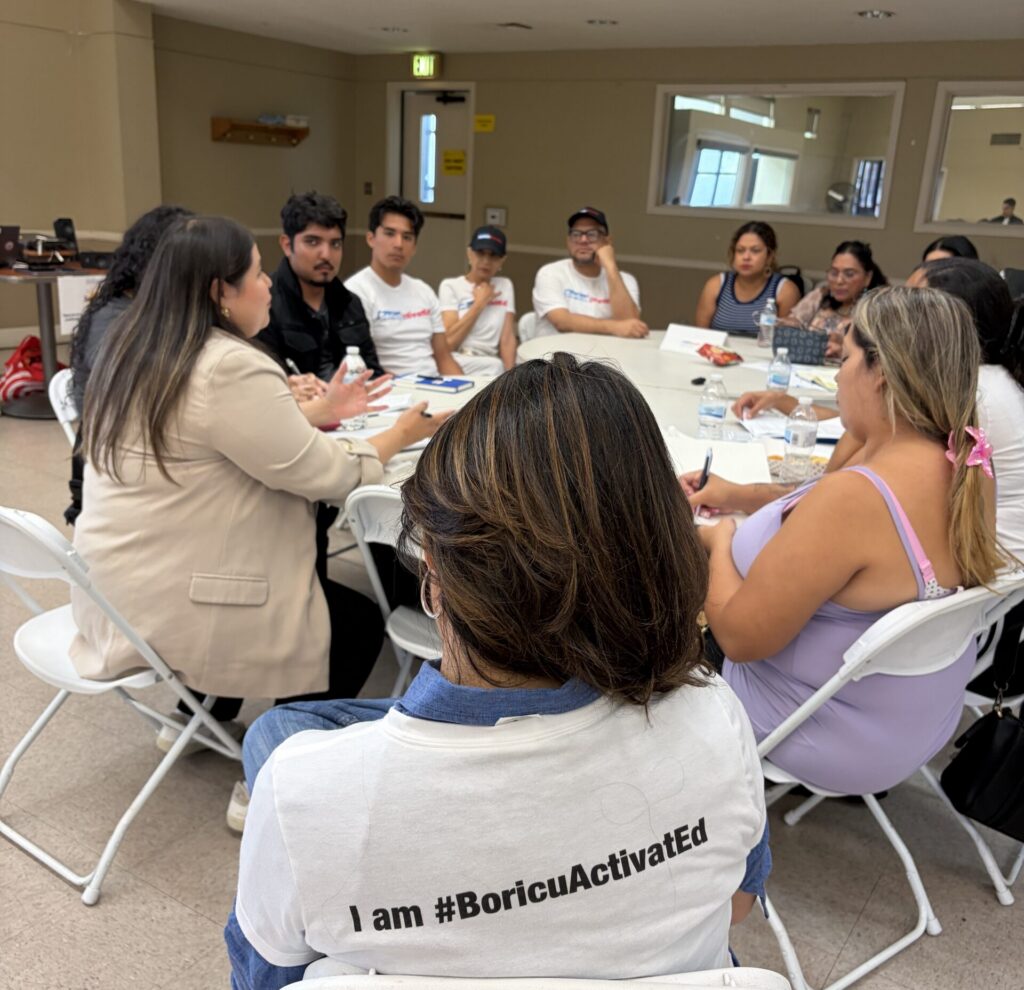
That distinction has been on my mind since one of our recent BoricuActivatEd workshops with parents from UCLA Early Head Start.
During the workshop, I met a mother named Magdalena. She spoke about her son, who is neurodivergent, and an experience her family had with his school. Magdalena shared that school police had been involved with her son because, according to the school, they wanted to teach him a “value lesson.” She talked about the need for behaviors related to a child’s disability to be met with understanding, appropriate support, and trained intervention rather than punishment. She also asked a really powerful question: “Who is protecting neurodivergent children from being harmed, misunderstood, or neglected within systems that are supposed to support them?”
After our workshop, I was ecstatic to see what she did next— she followed up.
She not only sent an email expressing her concern to the elected official’s office but also reached out to us for support. The hope was there, and so was the action and follow-through. And we were the team that had her back. There was no guarantee that sending that email would produce the outcome she wanted. I’ve said it before, and I’ll say it again: taking action does not guarantee that the answer will be yes, that a policy will change, or that a problem will be solved quickly. But there is no change and no answer in silence. And you also stated her value and her role in procuring a solution. She understood the difference between control and agency, and she exercised her agency. And she did it respectfully and deliberately.
Hope matters. Hope can get us through difficult moments. It can help us imagine something better than what exists today. It can remind us that circumstances are never permanent. But hope cannot send the email. Hope cannot attend the meeting, ask the question, tell the story, make the phone call, or follow up when the conversation is over.
People do those things.
Over the last few months, I’ve been thinking and writing a lot about what participation actually requires of us. In August, I wrote about the myth of being ready and why we cannot wait until we feel completely prepared before we participate. In September, I wrote about trust and the responsibility institutions have to show people that their participation matters. Once we decide that something matters to us, what are we willing to do about it? As we say in our workshops, what are you doing about what keeps you up at night?
I am not saying you have to make a grandiose effort like leading a campaign or starting an organization (although it can mean that). We can get caught up in stories about the mother who started the organization or the father who made the news. Participation can be much simpler. Sometimes it is just an email after a meeting. Sometimes it is asking for another conversation. Sometimes it is doing the research so you understand who actually has the authority to address the problem. Sometimes it is telling your story again, even though you wish you didn’t have to. And it can also sometimes mean pushing back when the answer isn’t quite the one you wanted.
I know that change can be frustratingly slow. And I know it is exhausting to keep showing up when you already carry so much: the kids, the workload, the dishes, the laundry, the soccer practice, the bills, and everything in between. Participation takes time and energy. And there are real barriers that make participating easier for some people than for others.
So I don’t say “hope is not a strategy” to dismiss hope or suggest that people simply aren’t trying hard enough.
A parent decides that what happened to her child should not happen to someone else’s. A community member asks a question that forces people to look at an issue differently. Someone follows up after everyone else has gone home. One conversation leads to another. None of those actions guarantees change. But they create the possibility for it.
Magdalena ended her email by saying that she looked forward to continuing the conversation. I don’t know yet where that conversation will lead; that’s the nature of this work.
She took her hope into action. So I leave you with this question: What is something you hope will change, and what is one thing you can do to help make it change?
Since our workshop, Magdalena has continued following up and has now engaged with the offices of her California state senator and assemblywoman. Things are moving forward, and she is seeing what can happen when she exercises her agency, not only for her own child but potentially for other children and families facing similar challenges. A happy update, and a reminder of what continued participation can accomplish.