Trust is a big word for something that is often built in very small ways.
Someone returns the phone call. A question gets an honest answer. An elected official shows up when there isn’t a camera in the room. An organization follows through on something it promised. Someone says, “I don’t know, but I’ll find out,” and then actually does.
None of these moments will make the news. They probably won’t appear in an annual report or become part of a campaign speech. But after years of working inside government and now alongside communities and organizations across the country, I’ve come to believe they matter more than we sometimes realize.
The opposite is also true. A call goes unanswered. Someone attends a public meeting and feels dismissed. An organization asks a community for input, but nobody ever hears what happened with it. A politician appears when they need something and disappears when the election is over. One interaction may seem insignificant to the institution involved, but to the person on the other side, that interaction can become evidence of whether the institution deserves their trust.
According to Pew Research Center, just 17% of Americans said in 2025 that they trust the federal government to do what is right “just about always” or “most of the time.” When the question was first asked in 1958, that number was 73%. Trust has risen and fallen over the decades, but Pew notes that the current measure is among the lowest recorded in nearly 70 years.
Those numbers tell us something important about the relationship Americans have with their government. What they cannot always tell us is how we got here.
I don’t believe most people wake up one morning and suddenly decide they no longer trust an institution. More often, distrust accumulates. It happens through experiences, both personal and observed. A promise that wasn’t kept. A process that wasn’t explained. A decision that seemed to have been made before anyone bothered asking the community what it needed.
Trust can accumulate in much the same way.
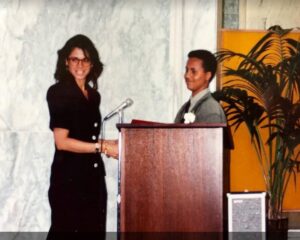
Decades ago, I had the good fortune of having a dear friend who worked for Edward James Olmos, and I was invited to tag along to my very first Sundance Film Festival. That weekend, I met Olmos, who would become a lifelong friend. He gave me his number and, more importantly, he always answered when I called.
And I did call, often. My boss in Congress needed a celebrity to join us for a press event. We needed a speaker. There was usually an ask of some kind. And Olmos always responded. He still does, even when he has faced serious health setbacks; nothing has kept him away from responding. He has remained the same person I met all those years ago: responsive, generous with his time, and willing to show up when he can.
His example was more than impressive; it was instructive. He taught me that an Academy Award-nominated actor, a busy professional, and a devoted family man could still make the time to respond, engage, and, most importantly, show up. In a world where people can be quick to promise and slow to follow through, he stood apart. He is real, dependable, and consistent. His example inspired me to want to hold myself to that same standard.
I’ve thought about his example many times over the years because trust is often discussed as though it is something abstract. But what Olmos showed me is that trust can be remarkably practical. You answer. You follow through. You show up. And when you can’t, you say so.
I’ve seen throughout my career that when people believe someone is listening, when they understand the process, and when they see that their participation has been taken seriously, other relationships change. They may not get the answer they wanted. They may still disagree with the decision. But disagreement and distrust are not the same thing.
Trust cannot mean that government, elected officials, nonprofits, or other institutions always tell us what we want to hear. That’s neither realistic nor particularly healthy. Sometimes the answer is no. Sometimes there isn’t enough funding. Sometimes competing priorities mean a decision goes another way.
But there is a difference between receiving an answer you don’t like and feeling as though your voice never mattered in the first place.
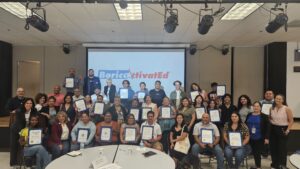
This is something I think about often in our work at BoricuActivatEd. We teach people how to engage with institutions, but that relationship has two sides. We can prepare someone to walk into a meeting, do their homework, tell their story, and make a clear ask. Institutions also have a responsibility to make participation meaningful.
That doesn’t mean promising everyone the outcome they want. It means explaining the process, answering the question, following up, and being honest about what is possible and what isn’t. Perhaps most importantly, it means treating the person who took the time to participate as though their time mattered too.
Those things sound small because they are small. But relationships are made of small things. And so is distrust. Small disappointments, repeated often enough, can eventually become something much larger.
Last month, I wrote about the myth of waiting until we feel completely ready to participate. I still believe we cannot wait for perfect circumstances before we engage. But institutions cannot ask people to keep showing up while giving them little reason to believe their participation matters.
Trust is not something an institution can ask for simply because of the position it holds. It has to be built, reinforced, and sometimes rebuilt. Usually, that doesn’t happen through one grand gesture.
It happens in the small moments when someone has the opportunity to show us that they mean what they say.