I have been doing this work for a long time, and I still get emotional the day before the election, on election day, and all the days after an election.
It isn’t only about who won or lost, although I have spent most of my life paying close attention to that. What moves me is thinking about the people who stood in line on November 3. The grandmother who has voted in every election she can remember. The young man who turned 18 this year and wasn’t sure where his polling place was until his primo told him. The woman who took her citizenship oath last spring and cast her first ballot as an American. The family that left Puerto Rico after Hurricane Maria and, for the first time, helped choose a member of Congress who now represents them.
I don’t know their names, but I know they showed up. After 25 years working in the U.S. House of Representatives and nearly a decade teaching civic engagement in our communities, I can tell you that every result we are talking about this morning started with people like them.
In Texas on January 19, 2027, at noon, Gina Hinojosa will become the state’s first Latina governor and the first Latina to lead any state outside New Mexico. Latinos make up about 40 percent of Texans, so this has been a long time coming. I keep thinking about the young women in places like the Rio Grande Valley who watched the results come in on election night and saw, maybe for the first time, someone who looks like them stepping into the highest office in their state.
She was not the only Latina on the ballot. Latinas ran this year in both parties, for the U.S. Senate, for statewide offices, and for House seats in states that have never sent a Latina to Washington. Not all of them won. But not one of them waited until she felt completely ready. I wrote about this over the summer in The Myth of Being Ready, and I believe it even more today. Confidence rarely precedes participation but it grows because we do. Every woman who put her name on a ballot this year made it a little easier for the next one to imagine doing the same.
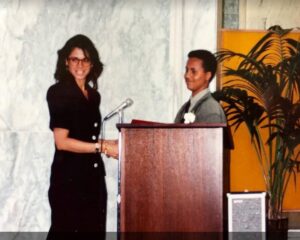
I started my career in Congress in the Office of Puerto Rico’s Resident Commissioner, and became the first Puerto Rican female Chief of Staff years while working for Luis Gutierrez. So I always watch closely to see how our people do on Election Night. In the Bronx, Alexandria Ocasio-Cortez and Ritchie Torres were reelected by wide margins. In Brooklyn, we are coming to the end of an era. Nydia Velázquez, the first Puerto Rican woman ever elected to Congress, is retiring after more than three decades of service. So many of us see Congress as a place where we belong because she was there first.
In Central Florida, Congressman Darren Soto, the first Floridian of Puerto Rican descent elected to Congress, held on to his seat in a district that was redrawn to make it much harder for him to win. He won by roughly 1,500 votes out of more than 280,000 cast. I want us to think about that number. Fifteen hundred people could be the members of a few churches, or the families in a couple of apartment buildings in Kissimmee. That is what a community can do when it decides its voice matters. It can make a difference. Their vote made the difference.
Osceola County, home to one of the largest Puerto Rican communities in Florida, voted very differently than it did just two years ago. In Texas, the counties with the most Latino residents saw bigger changes than anywhere else in the state. I have worked with Republicans and Democrats my entire career, and I don’t read this as a story about one party. I read it as a reminder that our communities are never to be taken for granted. We aligned and then we desaligned or realigned. We are not boxed. We are fluid. Our votes must be earned. We pay attention, we think about what is happening at our own kitchen tables, and when we turn out, we change the outcome.
Election Night also brought many firsts, including Keisha Lance Bottoms in Georgia, the first Black woman ever elected governor in this country. Firsts like hers are made possible by people who ran before the country was ready to say yes. Stacey Abrams ran for governor of Georgia twice and lost both times, but in between those races she kept doing the slow, steady work of registering voters, organizing neighborhoods, and helping people understand how the system works. That work lasted longer than either campaign. This history does not belong to one party, either. Republicans Ileana Ros-Lehtinen and Susana Martinez opened doors as the first Latina elected to Congress and the nation’s first Latina governor.
We have our own Boricua trailblazers such as Herman Badillo, who became the first Puerto Rican-born voting member of Congress in 1970, and Nydia Velázquez, who followed as the first Puerto Rican woman. Every Boricua whose name appears on a ballot today is walking down a path cleared.
We say this often in our workshops: you don’t have to win to matter.
Sometimes you run so someone else can.
First-time voters are the part of this election that gives me the most hope. Nationally, about one in eleven voters said this election was the first time they had ever voted in a midterm. More than 4 million Latinos turned 18 between 2022 and 2026, and they make up most of the growth in Latino voters. About 1 million Latino adults became naturalized citizens during those same four years, and more than 170,000 people have become citizens this year alone. Many of them voted even as surveys showed new citizens feeling less secure than they did a few years ago. I admire that more than I can say. This fills me with hope for the next steps.
Then there are the Boricuas who have moved from Puerto Rico. We are U.S. citizens from birth and can register as soon as we settle stateside, but nobody hands you a guide when you land at the airport. On the island, you cannot vote for president, our only representative in Congress is a Resident Commissioner who does not have a full vote, and there were no regular islandwide elections this year. When a family moves to Orlando or Philadelphia or Cleveland, they face new rules, new deadlines, and candidates and races they may never have heard of.
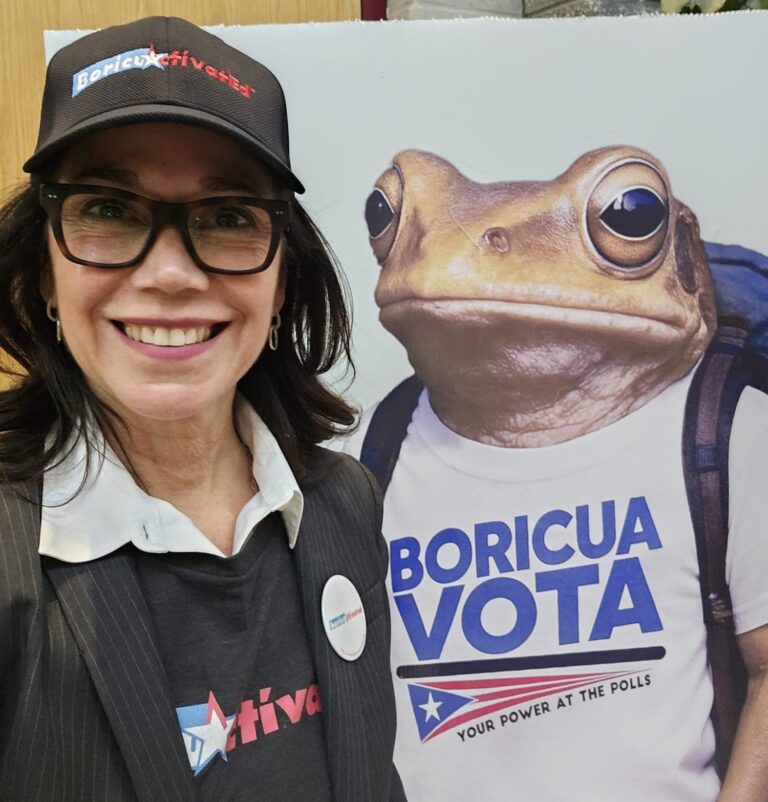
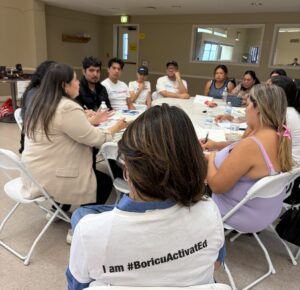
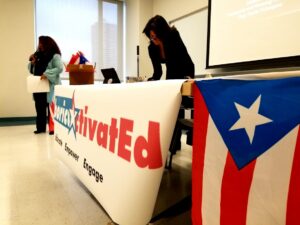
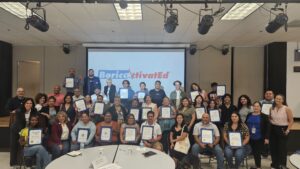
That gap is the reason BoricuActivatEd exists. After Hurricane Maria, I saw how many of our people had never been taught how to navigate the government that shaped so much of their lives. We started teaching the basics because someone had to.
The good news is that our communities came in motivated this year. Before the election, more than half of Latino registered voters said they were extremely motivated to vote, compared with about 40% in 2022, and Latino early ballots were up 14 percent from the last midterm. It’s amazing what a difference a midterm election can make!
If you voted, thank you. Now I hope you will take one more step. I urge you to find out who represents you, from your city council to Congress. Check your registration if you have moved. Talk to someone in your life who didn’t vote and ask them why. And if your church, school, or community group wants to learn how to make its voice heard, please reach out to us. This is the work we love.
I’ll leave you with the question we ask in every workshop: What keeps you up at night, and what is one thing you will do about it before the next election?
We showed up. Don’t stop now.